Indonesia has declared the Middle Way AI approach as a new direction for the development and use of artificial intelligence (AI). The approach emphasizes a balance between technological innovation, data sovereignty, and the interests of society.
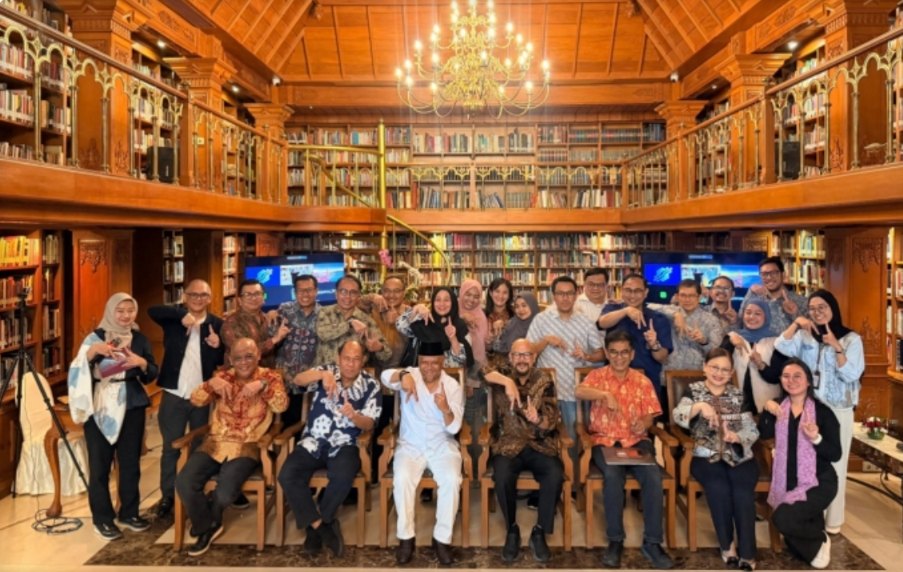
The declaration was initiated by the Founder & Chairman of the Digital Divide Institute, Professor Craig Warren Smith PhD, together with a member of the National Information and Communication Technology Council (Wantiknas), Dr.-Ing. H. Ilham Akbar Habibie, at Wisma Habibie Ainun, Jakarta, coinciding with the commemoration of the birthday of Indonesia’s third president, B.J. Habibie.
Middle Way AI was introduced as a concept that rejects two extreme approaches to AI development: the dominance of global market interests without regard for national sovereignty, and regulation so rigid that it stifles innovation. Within the concept, human beings, consciousness, data sovereignty, equitable access, and the improvement of public productivity are placed at the center of AI development.
“Indonesia has a great opportunity to play a strategic role in the development of global AI, supported by its large population, a continuously growing digital economy, and a vast ecosystem of micro, small, and medium enterprises (MSMEs),” Ilham said in his statement on Friday. In his view, AI should serve as an instrument to broaden society’s economic participation, not to widen the digital divide.
The Importance of AI Governance
The Jakarta Declaration also stressed the need for transparent and accountable AI governance, the strengthening of national capacity, and the development of institutional and financing frameworks — so that Indonesia is not merely a user of technology, but is also able to set the direction of AI development in line with national interests.
Professor Craig Warren Smith described Middle Way AI as an approach that places the public interest at the heart of technology development — one expected to drive innovation while safeguarding data sovereignty, expanding access to technology, and creating more equitable economic growth.
The declaration was attended by representatives of government, academia, associations, industry, communities, and international partners — among them the Ministry of Communication and Digital Affairs, the Ministry of Higher Education, Science and Technology, the National Cyber and Crypto Agency (BSSN), Bappenas, KORIKA, The Habibie Center, MASTEL, Gadjah Mada University, the University of Indonesia, IPB, Esa Unggul University, Jakarta State Polytechnic, Huawei Indonesia, NEC Indonesia, and the international organization IIFTIHAR.
Participants also agreed that the Middle Way AI concept would continue to be refined through a collaborative process involving various stakeholders, including Professor Soraj Hongladarom of Chulalongkorn University, known as an academic in the philosophy of technology, information ethics, and AI ethics. Through the Jakarta Declaration, Indonesia is expected to play a more active role in building AI governance that not only pursues efficiency and economic growth, but also guarantees justice, sovereignty, and the equitable distribution of technology’s benefits to society.