Leadership
Coalition Co-Leads
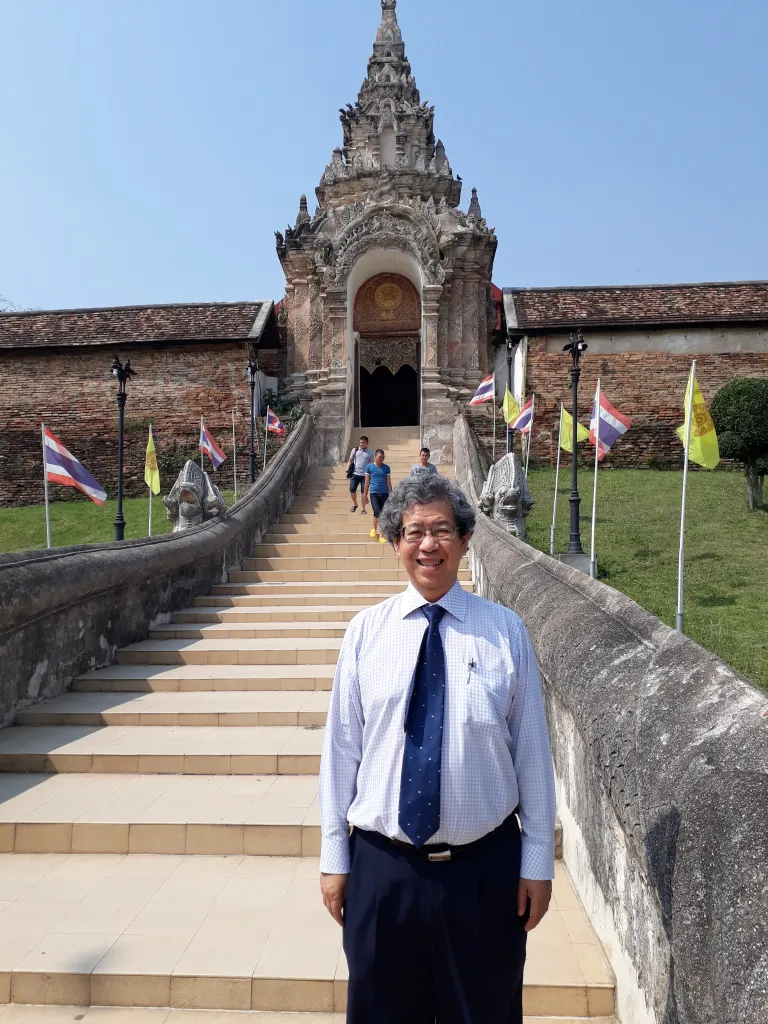
Professor of Philosophy at Chulalongkorn University, Thailand's premier academic institution. One of Asia's leading voices on AI ethics, digital culture, and Buddhist approaches to technology governance. Author of multiple books on the intersection of Eastern philosophy and information technology.
Professor Soraj brings three decades of philosophical inquiry into how Buddhist concepts of interdependence, mindfulness, and the Middle Way apply to contemporary technology challenges. His work provides the intellectual foundation for the coalition's approach: that consciousness must direct intelligence, not the reverse.
His position at Chulalongkorn University — consistently ranked among Asia's top 50 universities — gives the coalition institutional credibility and access to Thailand's policy-making circles. The university's 800-year tradition of advising Thai governance provides historical depth that no think tank or NGO can match.

Founder and Chairman of the Digital Divide Institute, with 25 years of experience creating technology governance frameworks for Global South nations. His "Meaningful Broadband" framework became national policy in Thailand (2006) and Indonesia (2007), establishing his track record of turning philosophical concepts into actionable governance.
Academic appointments include Harvard Kennedy School, MIT Media Lab, Lee Kuan Yew School at the National University of Singapore, ten years teaching philosophy at Chulalongkorn University, and three years as visiting professor at Peking University. This breadth provides deep understanding of both Western and Eastern approaches to technology governance.
Over 50 years of Buddhist contemplative practice, beginning in 1971, and teaching Mudra Space Awareness — a contemplative discipline rooted in Tibetan Buddhist monastic dance — at venues including Juilliard School. Co-organized the original digital divide movement at the 1999 Seattle WTO meetings with Bill Gates Sr. His experience bridges the contemplative and the practical in ways that inform the coalition's foundational principle: that consciousness must direct intelligence.
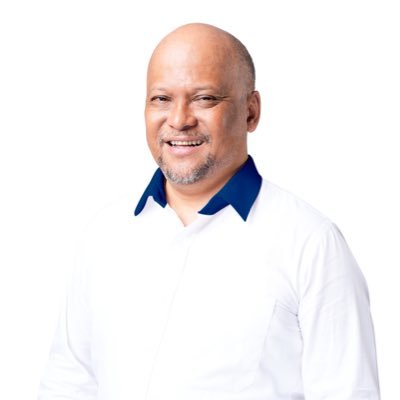
Chairman of the Indonesian ICT Society and son of former President B.J. Habibie. Leads Wantiknas, the National ICT Council that provides presidential-level interministerial coordination for technology governance — the institutional mechanism that makes cross-agency AI policy possible in Indonesia.
Long-standing partnership with the Digital Divide Institute, dating to the 2019–2020 Meaningful Broadband collaboration that helped shape Indonesia's digital infrastructure strategy. His position bridges the private sector (technology entrepreneur), the public sector (government coordination), and the legacy of Indonesia's most technology-forward presidency.
Ilham's role in the coalition is operational: he provides the institutional architecture for implementing AI Middle Way governance across Indonesia's 270 million people and 17,000 islands — the scale test that proves whether the model works in the world's most complex archipelagic nation.

Professor Hammam Riza is one of Southeast Asia's most influential figures in artificial intelligence, digital transformation, and cybersecurity. He serves as President of KORIKA (Kolaborasi Riset dan Inovasi Industri Kecerdasan Artifisial), Indonesia's primary multi-stakeholder body coordinating national AI research, policy, and industry collaboration toward the country's Vision 2045. He is concurrently Professor of AI at Syiah Kuala University in Banda Aceh and Principal Expert at Indonesia's National Research and Innovation Agency (BRIN).
His public service career spans more than three decades at the Agency for the Assessment and Application of Technology (BPPT), where he served as Chairman (2019–2021), Deputy for Information Technology, Energy and Materials (2014–2018), Chief Information Officer, and Director of the ICT Center. In 1995, he led IPTEKnet, Indonesia's first licensed internet service provider — a foundational moment for the nation's digital infrastructure.
Professor Riza holds a Doctorate in Electrical Engineering (cum laude) from Bandung Institute of Technology (ITB), conducted in part at the Computing Research Laboratory at New Mexico State University, and a Master of Science in Computer Science from the University of Kentucky. He also serves as Chairman of the Indonesian Technology Auditor Association (IATI), Vice President of the ASEAN CIO Association, and a member of the international advisory panel for the 2026 International AI Safety Report led by Yoshua Bengio.
As a UNESCO AI Ethics Expert, Professor Riza brings to the AI Middle Way Coalition a rare synthesis of technical depth, policy authority, and Global South leadership essential to advancing a values-grounded, pluralistic vision for global AI governance.

Stephen Silha is a freelance writer, filmmaker, facilitator, and futurist. A former reporter for The Christian Science Monitor and The Minneapolis Star, he has worked with the United Nations, Children's Express News Service, Libraries for the Future, Corporate Philanthropy Report, Yes! Magazine, and the Idaho Commission on the Arts. His research study Good News/Good Deeds: Citizen Effectiveness in the Age of Electronic Democracy (1999) examined the emerging communications ecosystem of news media, nonprofits, and "new media."
He is past president of AIDS Housing of Washington, which built the first hospice in the U.S. specifically for people with AIDS. He has co-facilitated youth-adult dialogues on Vashon Island, and was co-founder of Journalism That Matters, a think-and-do tank on the future of journalism. He produced and directed the award-winning 2013 documentary BIG JOY: The Adventures of James Broughton, about one of his mentors. He co-curated the exhibit IN AND OUT: Being LGBTQ on Vashon Island at Vashon Heritage Museum.
For years, Stephen has consulted with the Digital Divide Institute and the AI Middle Way Coalition, bringing a futurist's sensibility, a journalist's discipline, and a facilitator's gift for convening difficult conversations to the coalition's work.