Where We Work
Each coalition nation was selected for strategic position, institutional readiness, and the ability to demonstrate that a middle way between Washington and Beijing is not just possible — it is already emerging.
Global Dynamics
When the US and China achieve "co-opetition" — collaborating while competing — two-way interactions emerge with the big nations of the Global South across three tiers.
Tier One — Proof of Concept
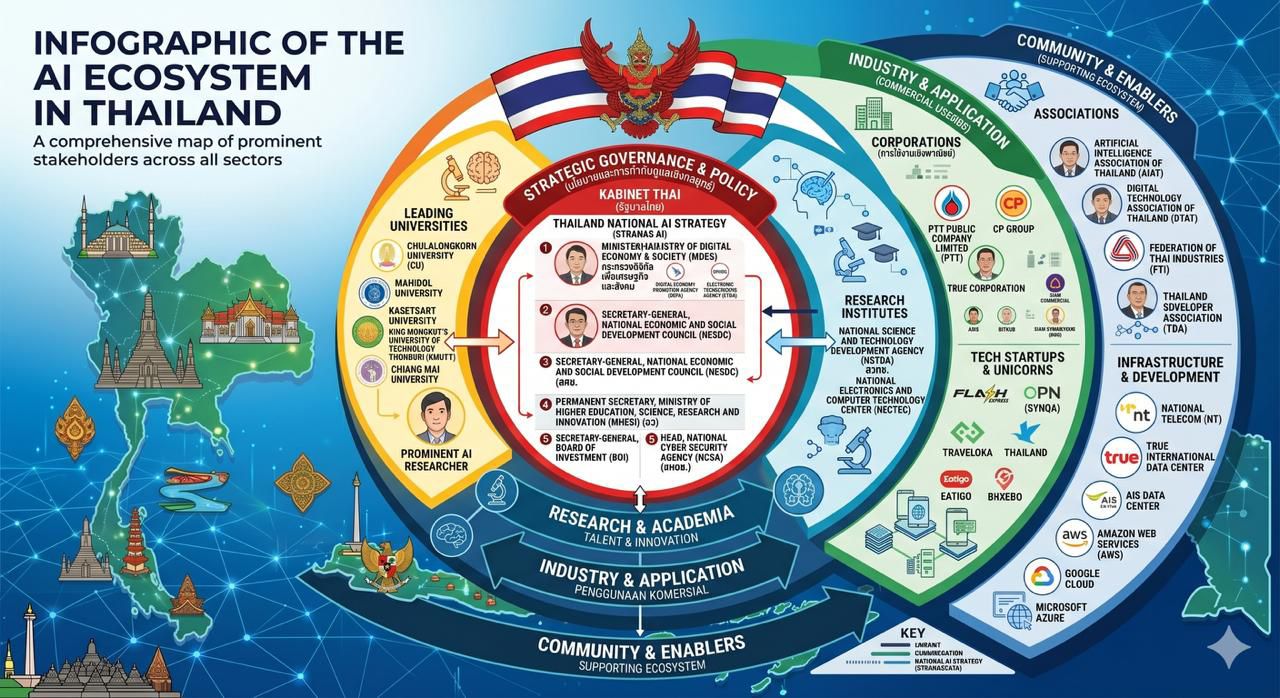
Thailand's 800-year tradition of balancing between greater powers — from Ayutthaya's diplomacy between European empires to modern navigation between the US and China — makes it the natural home for the Middle Way Coalition. Chulalongkorn University, the nation's premier institution, provides the intellectual anchor through Professor Soraj Hongladarom's work on AI ethics and Buddhist philosophy.
Buddhist majjhimā paṭipadā (middle way) provides the conceptual foundation. This is not imported Western theory — it is indigenous philosophy applied to contemporary governance.
NBTC adopted Meaningful Broadband as national policy in 2006. Thailand has existing institutional capacity for technology governance frameworks.
Thailand's ASEAN membership, its position between Chinese and US influence spheres, and its history of diplomatic non-alignment make it credible to all parties.
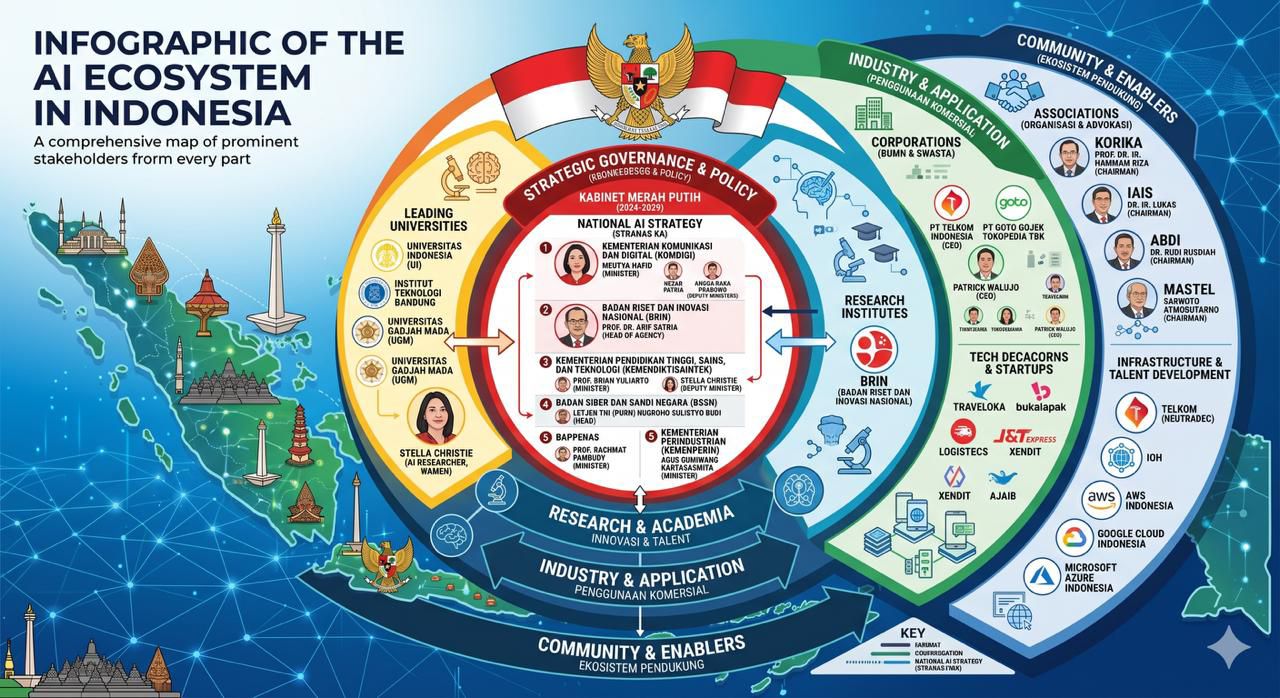
Indonesia is where the theory becomes practice. The world's largest Muslim democracy, fourth-largest population, and the nation that already proved cooperative formalization works through the Gojek model. Ilham Habibie's Wantiknas framework provides interministerial coordination at the presidential level, and Sri Mulyani's fiscal reforms expanded the taxpayer base from 4.35 million to 16 million — pre-AI.
Gojek proved AI-enabled cooperative formalization at scale. 2+ million drivers voluntarily formalized. The Sri Mulyani fiscal framework is ready to be AI-enhanced.
Wantiknas (National ICT Council) under Ilham Habibie provides presidential-level interministerial coordination. Meaningful Broadband adopted 2007.
Nadiem Makarim's Merdeka Belajar reforms created the "how to learn" pedagogy. The AI Middle Way scales this to just-in-time employment pathways.
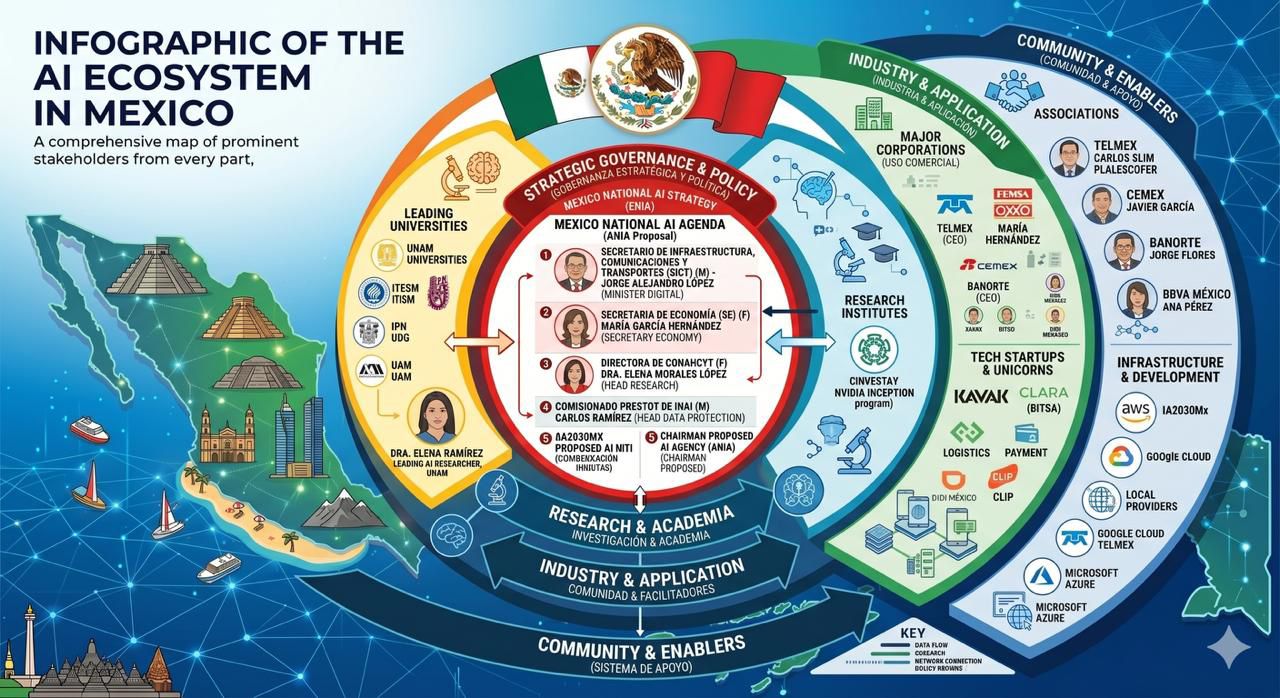
Mexico sits at the intersection of North and South America, a USMCA member that is also the gateway to 650 million Latin Americans. Its tianguis market tradition — open-air trading networks predating the Aztec empire — represents the world's most sophisticated informal economy infrastructure, ready for digital formalization.
USMCA membership gives Mexico unique leverage: the US needs Mexico's cooperation, which creates bargaining power for data sovereignty terms that other nations can emulate.
The tianguis tradition and Catholic social teaching (via media) provide indigenous frameworks for cooperative economics that predate and enrich Middle Way philosophy.
130 million people and Latin America's second-largest economy. Success in Mexico makes the case for Brazil (215M), Colombia, Argentina, and the rest of the continent.
Peru's strategic value to the coalition is concentrated in one extraordinary asset: Pope Leo XIV's dual US-Peruvian citizenship and two decades of pastoral work in Peru. The Vatican's convening power — the ability to bring nation-states to the table — transcends geopolitics in ways that no other institution can match.
Pope Leo XIV can convene conversations that no diplomat, CEO, or foundation president can. The Vatican's 2,000-year track record of institutional persistence provides credibility.
Andean ayni reciprocity — the pre-Columbian tradition of mutual aid — aligns with cooperative formalization principles and provides indigenous philosophical grounding.
Peru connects the coalition to the Andean nations (Bolivia, Ecuador, Colombia) and the broader Latin American solidarity tradition.
Tier Two — Expansion (2028–2030)
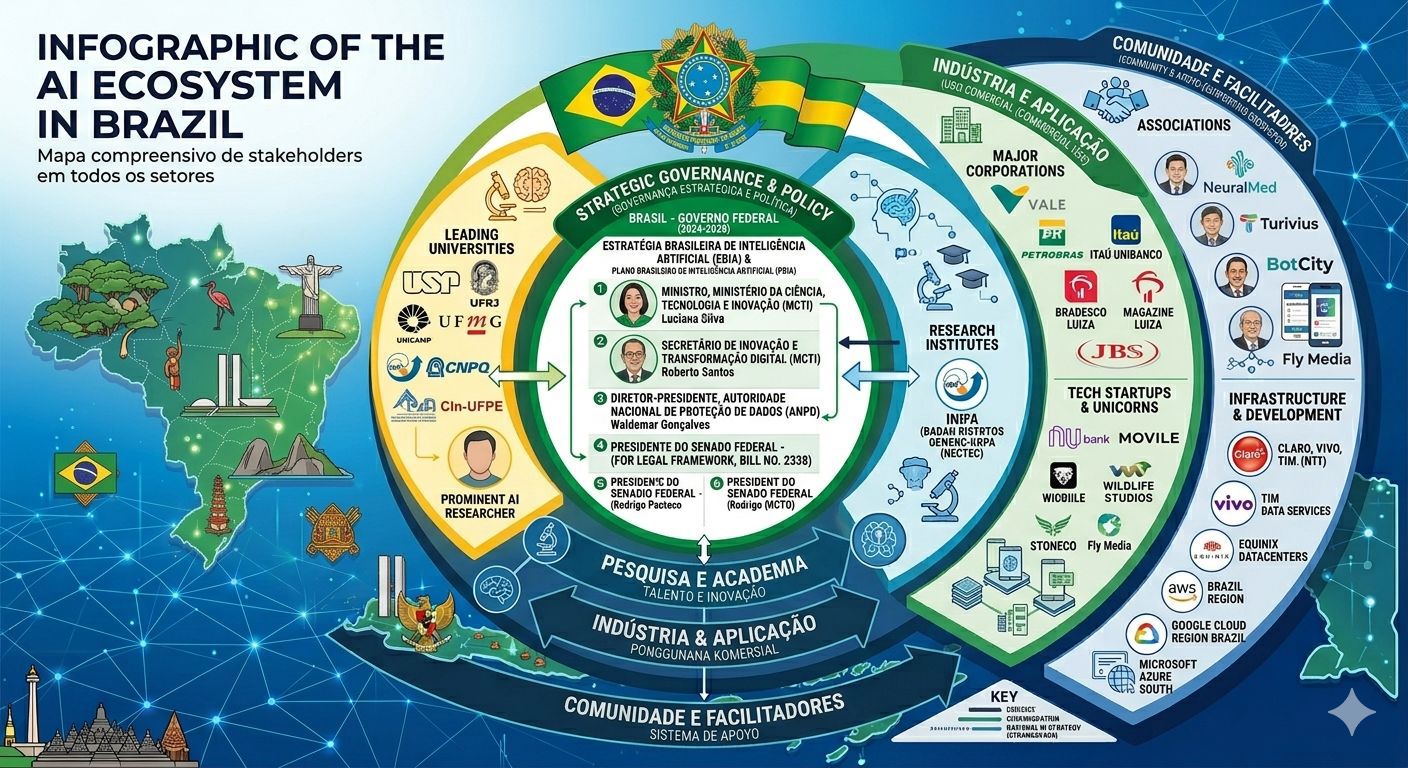
215 million people. Latin America's largest economy. Pix instant payments already process 150M+ transactions daily. The Lula government's digital inclusion agenda aligns with Middle Way principles.
60 million people. Africa's most industrialized economy. Gateway to the continent's 1.4 billion people. The ubuntu tradition of communal responsibility provides philosophical alignment.
Nations, foundations, and enterprises that share the vision of a third path for AI governance are welcome.